Turning Clinical Complexity Into a Predictive Health Solution
Designing a digital health concept to reduce emergency events and improve outcomes with MS sufferers.
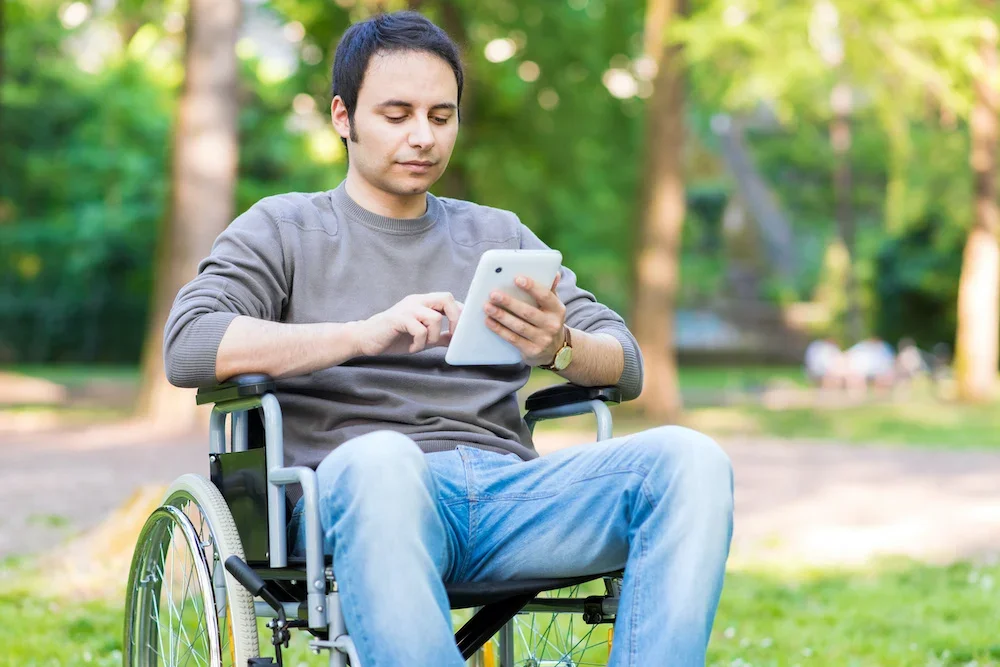
Case Study: Multiple Sclerosis Health Solution
People living with multiple sclerosis (MS) have it rough. Falling, getting hurt, and ending up in the emergency room is a common—and costly—part of life with this debilitating disease.
At the time, my company was both an insurer and a hospital owner. We were looking for ways to reduce costs, create new revenue, and open new markets.
Each stakeholder had a clear problem:
Hospitals: MS patients often arrived through the ER, resulting in expensive care
Insurer: MS was one of the most expensive diseases to insure
MS sufferers: Patients had no way to predict flare-ups that could suddenly send them to the hospital
My goal was to solve all three problems at once.
The Hypothesis
We asked a simple but powerful question:
Could we predict good days versus bad days for people with MS?
If we could, we imagined a simple app that showed a sun or a cloud—signaling whether someone was likely to have a good day or a bad day.
The Team & Data
I led a matrixed team made up of two co-workers, one external partner, and two vendors.
An early Fitbit prototype captured quantitative biometric data. Qualitative insights were gathered through short daily text entries from participants describing how they felt.
Agile Testing & Validation
Working in agile sprints, we tested:
Customer interest in the solution
Advertiser interest (pharmaceutical companies)
Sensor technology accuracy
Statistical validation methods
Wireframes and UX concepts
Algorithm development
Statistical & Analytical Methods Used
To validate predictions, we applied:
Linear regression to identify relationships between biometric signals and flare-ups
Decision trees to surface key predictors of good vs. bad days
Random forests to improve prediction accuracy
Confidence intervals to measure reliability
Hypothesis testing (t-tests and z-tests) to confirm statistical significance
What the Tests Proved
Desirability
End-users were ecstatic about the concept. It gave them a sense of control over a disease that often feels unpredictable.
Feasibility
The algorithm worked. Using sensor data and personal feedback, we could statistically predict when flare-ups would occur.
Viability
The business model supported three revenue tiers:
Freemium access
A paid app
Advertising from pharmaceutical companies with direct access to their target audience
Overcoming Constraints
We hit one challenge: we were not allowed to speak directly with “patients,” only “consumers.” So we had to get creative.
Our first sprint tested general interest. Each fall, the MS Society hosts a walk in my city. We surveyed attendees and analyzed the data, which showed strong demand.
We partnered with the MS Society, which ran an ad in its magazine to recruit participants. We quickly secured over 100 participants for the pilot.
Pilot Results
During a six-week pilot, participants used the body sensor and kept a personal diary. The results were clear—we could reliably predict good days versus bad days for people with MS. The remaining work was to finalize the user experience.
Why This Project Matters
This project shows how human-centered design, rigorous research, and rapid testing can create value for patients, hospitals, and insurers at the same time.
Additional research methods used: one-on-one interviews, surveys, controlled experiments, and focus groups.
Result
Although the solution proved viable, the project was deprioritized due to competing organizational priorities.